
Veterinary Physiotherapy for Dogs | Rehab & Mobility

Many dog parents only discover veterinary physiotherapy for dogs after something has gone wrong. An injury. A diagnosis. Surgery. Until that point, most of us assume that rest, medication, or time will be enough.
I was no different. I didn’t know veterinary physiotherapy existed until my own dog needed it. And if I didn’t know about it then, chances are many dog parents still don’t.
Veterinary physiotherapy for dogs is not only about rehabilitation after surgery. It can play an important role in supporting mobility, managing discomfort, addressing compensation, and improving quality of life for dogs at many different stages of life.
Along the way, you will likely also come across animal rehabilitation practitioners. It is a separate qualification with its own training and professional affiliations, working alongside veterinary physiotherapy rather than in place of it, and Emmy has been cared for by both over the years.
This post is not medical advice. I am not a vet, physiotherapist, rehabilitation practitioner, or surgeon. I am a dog mom sharing what I have learned through experience, in the hope that it helps other dog parents feel more informed and supported.
What is veterinary physiotherapy?
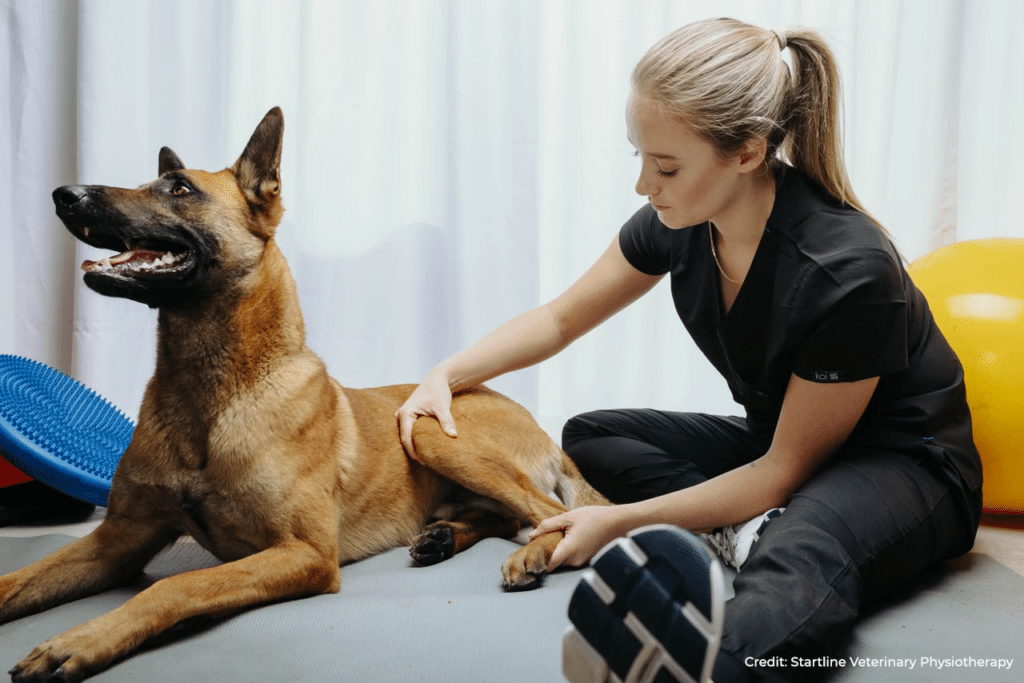
Veterinary physiotherapy focuses on assessing how a dog moves and identifying areas of weakness, stiffness, discomfort, or compensation. Treatment plans are tailored to the individual dog and are used alongside veterinary care, not instead of it.
A veterinary physiotherapist looks at the whole dog, not just the site of injury. By understanding movement patterns, muscle balance, and joint function, physiotherapy aims to improve comfort, strength, and mobility while reducing strain on other parts of the body.
Veterinary physiotherapy vs animal rehabilitation
The two terms get used almost interchangeably by dog parents, but they are not quite the same thing. Veterinary physiotherapists and animal rehabilitation practitioners come through different courses of study, and often belong to different professional bodies. In practice, the two roles overlap heavily and many dogs are cared for by both across their lifetime, so the distinction matters less to your dog’s outcome than finding someone properly trained and experienced. If you are unsure which you are dealing with, it is entirely reasonable to ask a practitioner directly about their qualification and affiliation.
When dogs may benefit from veterinary physiotherapy or animal rehabilitation
Both are often associated with recovery after surgery, but their role is far broader than that.
Dogs may benefit following orthopaedic surgery such as cranial cruciate ligament (CCL) surgery or spinal surgery, including conditions like intervertebral disc disease (IVDD). It can also be helpful for dogs with arthritis, ageing dogs who are becoming stiff or less mobile, and dogs who are compensating through their shoulders, neck, or back due to hind limb discomfort.
Active, sporting, and working dogs may also benefit as part of ongoing maintenance, helping to support performance, reduce injury risk, and identify small issues before they become bigger problems.
In many cases, the earlier physiotherapy or rehabilitation support is introduced, the better the long-term outcome.
Common treatments in veterinary physiotherapy and animal rehabilitation
Treatment may include a range of approaches, depending on the dog’s needs, and the two disciplines share much of the same toolkit.
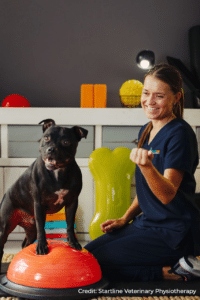
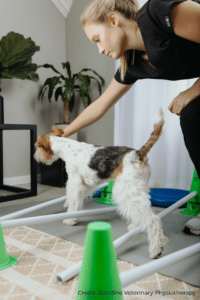
This can include manual therapy to address tight or overworked muscles, targeted exercises to improve strength and stability, and gait or movement assessments. Many rehabilitation programmes also incorporate underwater treadmill therapy or swimming, allowing dogs to build strength in a controlled, low-impact environment. Laser therapy is commonly used to help support circulation, reduce inflammation, and manage discomfort, particularly around joints and soft tissue. Biokinetic exercises, aimed at rebuilding body awareness, balance, and core strength, are also a common part of rehabilitation programmes.
Not every dog will require every type of treatment. A good programme adapts over time as the dog’s condition and needs change.
Emmy’s physiotherapy and rehabilitation journey
I was first introduced to this side of recovery after Emmy ruptured her first cranial cruciate ligament in December 2017. At the time, I had no idea that physiotherapy or rehabilitation formed part of post-surgical recovery for dogs.
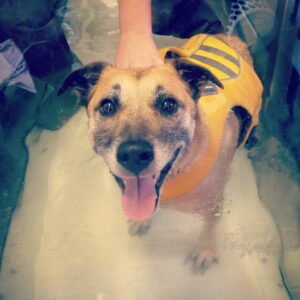
After her surgery, Emmy was referred to Pet Wellness Worx, working with Lorren, an animal rehabilitation practitioner. Her rehabilitation included laser treatment, underwater treadmill work, and swimming. That experience completely changed how I viewed recovery. Surgery alone was not the end of the process.
When Emmy ruptured her second cruciate ligament and underwent surgery again in July 2021, access to an underwater treadmill became especially important. At that stage, Equine Librium, located next to Panorama Veterinary Hospital, offered one of the few nearby rehabilitation options with an underwater treadmill, and Emmy completed her post-surgical rehabilitation there.
Equine Librium also operates as a training college, and during Emmy’s time there, I met a number of students training in veterinary physiotherapy and animal rehabilitation. Many have since gone on to build their own practices, including Kirsten, a veterinary physiotherapist who later established Startline Veterinary Physiotherapy.
“At Startline we offer mobile physiotherapy care for patients that prefer being in their own comfortable environment. This service allows us to get greater insight into the functional environment the patient is exposed to daily. We do a deep dive into how we can improve our patient’s ability to perform daily tasks and activities they love, whilst working with our client owners to make their pet’s space easier and more comfortable to navigate. It is imperative that the treatments we provide are maintained as long as possible with healthy functional bodies, from the morning breakfast routine to the evening bedtime routine. Startline focuses on preparing our patients for the start of their day, all the way to the finish.”
– Kirsten, Startline Veterinary Physiotherapy
As Emmy has aged, her physiotherapy needs have shifted from rehabilitation to long-term maintenance. Due to the discomfort caused by arthritis, the two cruciate ligament surgeries, and her age, Emmy now compensates by using her shoulders, neck, and back more than she should.
Today, her physiotherapy focuses on gentle soft tissue release to loosen overworked muscles, laser treatment on her knees to support circulation and comfort, and targeted exercises to help her stay strong and mobile. She now prefers in-home treatment, which suits her well at this stage of her life.
For Emmy, this kind of support did not end once recovery was complete. It evolved as her needs changed.
“Pet rehabilitation is a team effort, and we are here to support both you and your pet every step of the way. Treatment may include physical therapy and gentle hands-on techniques such as massage and range-of-motion exercises to help improve comfort, movement, and recovery. We may also use laser therapy to help reduce pain and inflammation, making your pet feel more comfortable as they heal. Biokinetic therapeutic exercises are also an important part of rehabilitation. These exercises help your pet rebuild body awareness, balance, strength, and coordination, while gently reactivating muscles that may have become weak or inactive, especially the core muscles needed for stability and good posture.”
— Lorren, Animal Rehabilitation Practitioner, Pet Wellness Worx
How to find a veterinary physiotherapist or animal rehabilitation practitioner
Finding a qualified veterinary physiotherapist or animal rehabilitation practitioner can feel daunting, particularly if you are not based near a large city or referral hospital.
A good starting point is always your vet. Many vets work closely with both and can recommend someone experienced in post-surgical rehabilitation, arthritis management, or long-term mobility support.
Some rehabilitation centres, such as Equine Librium, operate across multiple regions in South Africa and also offer training programmes for veterinary physiotherapists and animal rehabilitation practitioners. Facilities like these often serve as referral hubs and can be helpful when searching for reputable practitioners in different areas.
In-home treatment is another option, particularly for older dogs or dogs who find travel stressful. Many practitioners, of either qualification, offer home visits, allowing treatment to take place in a familiar, calm environment.
Wherever you are based, it is important to ensure that whoever you choose is properly trained and works in collaboration with your vet..
Veterinary physiotherapy, animal rehabilitation, and pet medical insurance
Veterinary physiotherapy and animal rehabilitation can feel out of reach for some dog parents, particularly when it becomes part of ongoing care rather than short-term recovery.
Understanding how pet medical insurance works, and what rehabilitation benefits may be included, can make a meaningful difference when planning your dog’s care.
Coverage differs between providers and plans, but physiotherapy and rehabilitation may be covered when prescribed by a vet, particularly following surgery or injury. It is always worth reviewing your policy details or speaking directly to your insurer to understand what support is available.
I have personally insured my dogs with MediPet, and they have covered both of Emmy’s CCL surgeries, her post-surgical rehabilitation, and some of her physiotherapy sessions over the years. In months where finances were a little tighter, having that support made it possible for her to continue with the care she needed, without having to compromise on her recovery or comfort.
“The success of many orthopedic surgeries doesn’t end in the operating theatre. It continues through rehabilitation. Physiotherapy plays an incredibly important role in helping pets regain strength, mobility and confidence, often determining just how successful their recovery and surgery will be.
— Louise Griffiths, Founder and CEO, MediPet
This is one of the reasons we chose to include physiotherapy and rehabilitation benefits in our comprehensive MediPet plans. I have seen first-hand the remarkable difference these treatments can make, particularly for larger breeds. Underwater treadmill therapy, for example, is an exceptional way to strengthen the muscular system by improving mobility and building muscle, all while minimising unnecessary stress on vulnerable joints.
Just like people, our pets sometimes need a little extra support to recover fully or to maintain their quality of life as they age. Financial constraints should never stand in the way of accessing the care that can make such a meaningful difference in their quality of life.”
Insurance is a safety net. It is not something to be taken advantage of, but rather there to support responsible, necessary care when it is genuinely needed.
Supporting physiotherapy outcomes at home
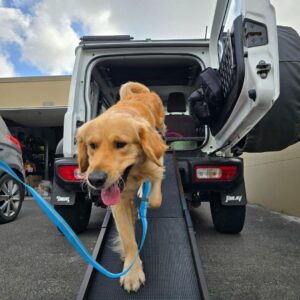
Physiotherapy does not only happen during appointments. The home environment plays an important role in supporting movement and long-term comfort.
Simple considerations such as non-slip flooring, controlled movement, and appropriate support for getting in and out of cars or onto furniture can help reduce unnecessary strain. Dog ramps, for example, can minimise impact on joints, particularly for dogs recovering from surgery or managing arthritis, by reducing the need to jump down. This applies just as much to large dogs as it does to small ones, and ties back to why repeated jumping causes so much joint damage in the first place.
Raised feeders may also improve comfort for some dogs by reducing the need to bend, particularly for dogs compensating through their front end. Suitability should always be discussed with a vet, especially for breeds prone to bloat.
Consistency, observation, and small daily adjustments often make a meaningful difference.
Final thoughts
Veterinary physiotherapy and animal rehabilitation are not only about fixing what is broken. Between them, they support movement, comfort, and quality of life over time.
For many dogs, physiotherapy or rehabilitation becomes part of a longer journey rather than a short-term solution. Understanding what each is, when they may help, and how they fit into overall care allows dog parents to make informed, compassionate decisions.
If you are navigating recovery, ageing, or mobility challenges with your dog, know that you are not alone. With the right support, thoughtful planning, and a team you trust, dogs can continue to live comfortable, happy lives.
Related reading:
- CCL Surgery in Dogs (ACL): What Every Dog Parent Should Know
- Arthritis in Dogs: Signs, Management and Ramp Tips
- IVDD in Dogs – What Every Dog Parent Should Know
- Pet Insurance in South Africa – How to avoid heartbreak
- Dog Ramps South Africa: Handcrafted & Sturdy for All Breeds
A quick note before you go: I’m not a vet or a veterinary physiotherapist. I’m a dog mom who’s lived through a lot of this myself with Emmy, Oscar and Levi, and learned the rest from other people’s dogs and from the research I’ve done working out how to build ramps that suit very different situations. I’ve also spoken to a lot of veterinary physiotherapists over the years, and much of what’s here comes from them. If your dog is showing any of the signs above, or anything here raises a question, please see your vet or a qualified veterinary physiotherapist, they know your dog and can give you the direct answer I’m not qualified to.


