
IVDD in Dogs – What Every Dog Parent Should Know

If you’re the proud parent of a Dachshund, Corgi, Beagle, or any long‑backed breed, you’ve probably heard of IVDD in dogs. Intervertebral Disc Disease (IVDD) is one of the most common spinal conditions in canines. While it can sound frightening, understanding what it is and how to prevent or manage it empowers you to protect your furry kid’s spine.
What is IVDD in dogs?
A dog’s spine is a chain of small bones (vertebrae) separated by flexible discs. Each disc has a tough outer ring and a gel‑like centre that acts as a shock absorber and allows the spine to flex. Over time, these discs can dry out or harden and may slip or burst. When a disc degenerates or herniates, it can press on the spinal cord and nerves, causing pain, weakness, or even paralysis.
Veterinarians recognise two main patterns of disc disease:
- Sudden disc rupture – the soft centre hardens and ruptures all at once, often after a jump or twist, and presses sharply on the spinal cord. This tends to affect younger dogs with long backs, such as Dachshunds.
- Slow disc bulging – the disc gradually dries out and bulges over months or years, causing chronic compression of the spinal cord. This form is more common in middle‑aged or older dogs, particularly large breeds.
Both forms are called Intervertebral Disc Disease (IVDD) and share the same end result: compression of the spinal cord, which can range from mild discomfort to loss of mobility. Understanding how discs deteriorate helps explain why avoiding repetitive jumping and supporting your dog’s spine with ramps and other preventative measures is so important.
Which Breeds are most at risk?
While any dog can develop IVDD, certain breeds are more predisposed because of their long backs and short legs (known as chondrodystrophic breeds).
Very high risk: Dachshunds (up to 1 in 4 will experience IVDD in their lifetime).
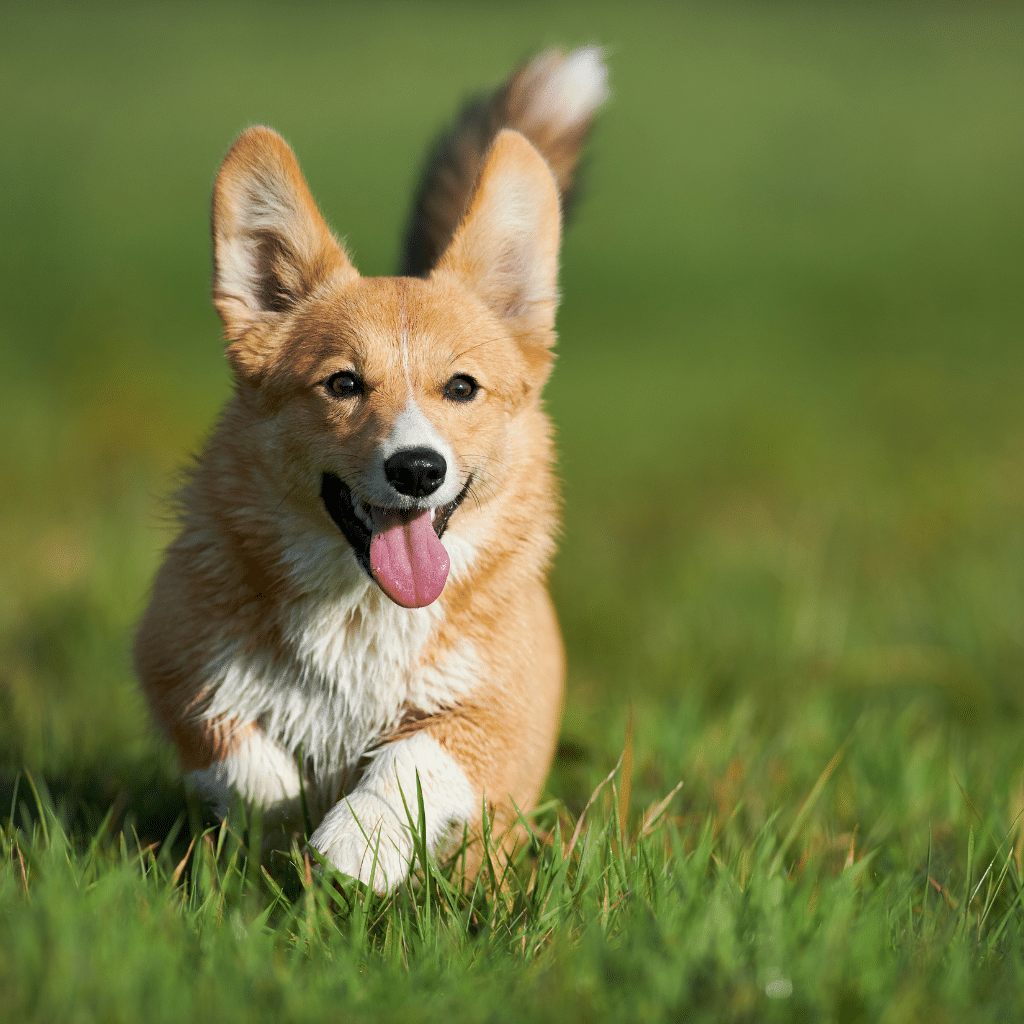
Other at-risk breeds: Beagles, Corgis, Shih Tzus, Pekingese, French Bulldogs, Basset Hounds, Poodles.
Larger breeds: Can also be affected, although less commonly.
Even if your dog isn’t one of these breeds, jumping on and off couches, beds, or cars can still put stress on the spine and joints, increasing the risk of IVDD in dogs, and prevention is always better than treatment.


Signs & Symptoms of IVDD in dogs
Symptoms vary depending on the disc location and degree of compression. Common signs include:
- Early pain signs: Hunched back, reluctance to move or jump, head held low, shaking/trembling, crying out, stiffness.
- Weakness & balance issues: Limping, wobbling or unsteady gait, stumbling over back feet, knuckling under.
- Severe neurological signs: Dragging hind legs, crossing hind legs, loss of paw sensation, inability to stand or walk.
- Loss of bladder/bowel control: Urinary or fecal incontinence.
- Complete paralysis in extreme cases.
Emergency warning: If your dog suddenly shows weakness, is unable to walk, or loses control of bladder or bowel, seek veterinary care immediately. Early intervention is critical to prevent permanent damage.
Diagnosis & Treatment Options
Your vet will start with a thorough physical and neurological exam. Imaging may be necessary to confirm IVDD and determine the best treatment:
- X‑rays: Show vertebrae spacing but do not reveal the spinal cord.
- MRI: The gold standard for pinpointing disc herniation and spinal cord compression.
- CT scan or myelography: Alternatives when MRI is not available.
Early diagnosis allows for more treatment options and better outcomes. Treatment depends on the severity of spinal cord compression and neurological deficits:
- Medical management (mild cases):
- Strict crate rest for 4–6 weeks to prevent further disc movement.
- Pain relief & anti‑inflammatories (NSAIDs or steroids) to reduce swelling.
- Muscle relaxants as prescribed.
- Physical therapy: Hydrotherapy, laser therapy, massage, and controlled exercises help speed recovery.
- Strict crate rest for 4–6 weeks to prevent further disc movement.
- Surgical intervention (moderate to severe cases):
- Recommended if there is significant weakness, loss of pain sensation, or worsening neurological signs.
- Procedures such as hemilaminectomy or dorsal laminectomy remove part of the vertebra to relieve pressure on the spinal cord.
- Post‑operative care: Crate rest, careful monitoring, and ongoing physical therapy.
- Recommended if there is significant weakness, loss of pain sensation, or worsening neurological signs.
The sooner surgery is performed after neurological decline, the better the chances of recovery
How to help, prevent or manage IVDD
While you can’t change genetics, you can make lifestyle adjustments that support your dog’s spine health.
Everyday prevention tips
- Avoid jumping: Repeated impact from leaping off couches, beds, or cars puts stress on the spine.
- Maintain a healthy weight: Extra weight = extra strain.
- Encourage gentle exercise: Regular walks and controlled play help keep muscles strong.
- Supportive lifting: Always lift by supporting both the chest and rear end.
- Harness over collar: Prevents unnecessary neck strain.
- Provide supportive bedding: A firm, cushioned bed keeps the spine aligned.
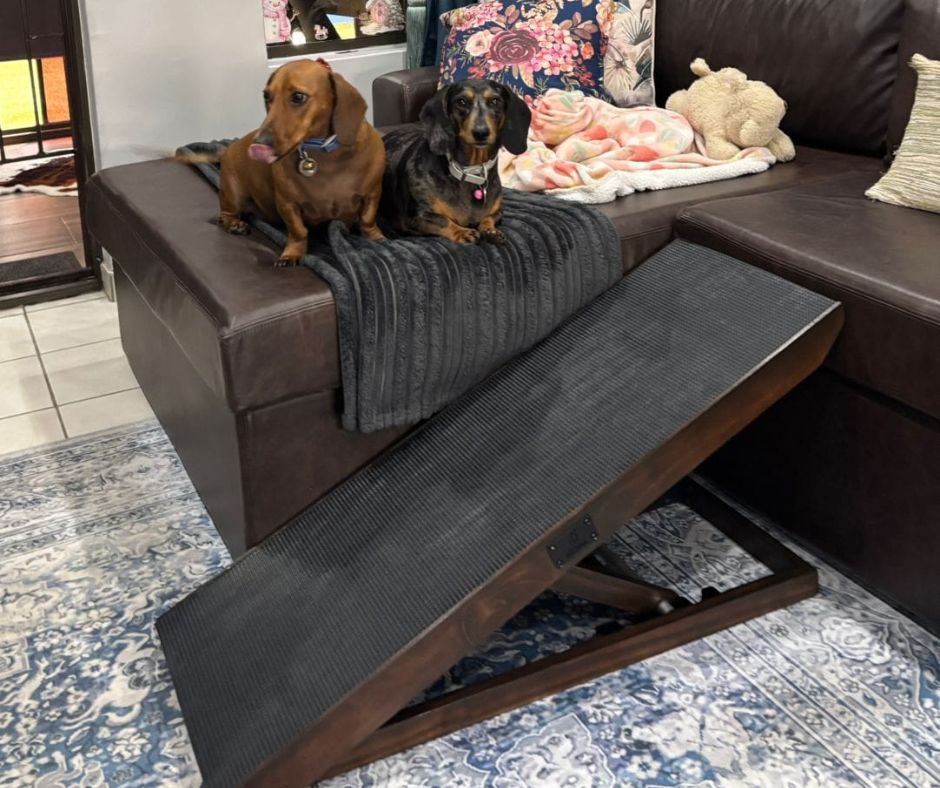
- Train with ramps: Teach your dog to use ramps for couches, beds and (if your dog isn’t small enough to lift in and out of your car) car ramps to prevent repetitive jumping.
Why Ramps are a game-changer for dogs at risk of IVDD
One of the most effective ways to reduce the risk of spinal injury and help prevent IVDD in dogs is to limit jumping. That’s where dog ramps come in. Jumping down is especially hard on joints and the spine. By using a ramp, your dog walks safely at a gentle angle instead of absorbing the shock of landing.
That’s why we created the Dog Mom® Handcrafted Signature Ramp Collection:
- A variety of ramps to suit couches, beds, and cars.
- High-traction rubber for confident grip.
- Strong enough for dogs up to 70 kg.
- Foldable and compact for easy storage.
Starting ramp training early helps your dog build positive habits and reduces spinal stress over a lifetime. Explore our Ramp Collection here and give your dog a safer way to enjoy their favourite spots.
Living with a dog diagnosed with IVDD
If your dog has already been diagnosed with IVDD, daily care becomes even more important:
- Follow your vet’s instructions precisely.
- Use ramps for couches, beds, and (where needed) cars.
- Keep playtime gentle — avoid rough jumping or tugging.
- Provide supportive bedding.
- Enforce rest and limit stair use (or use baby gates).
- Stick to a healthy weight.
- Explore physical therapy under professional guidance.
- Monitor carefully for changes, and stay in close contact with your vet.
- Stay patient – recovery can be gradual, and dogs often regain mobility with proper care.
Many dogs with IVDD live long, happy lives — with the right support, they can still enjoy plenty of tail wags and cuddles.
Final thoughts & resources
IVDD can sound scary, but knowledge is power. By spotting the signs early, seeking prompt veterinary care, and making proactive lifestyle changes, you can make a huge difference in your dog’s comfort and long-term health. Don’t ignore early signs of pain or weakness; early diagnosis and treatment make all the difference.
And remember — preventing damage is always easier than treating it later. Something as simple as a well-built dog ramp can take a big load off your pup’s back (literally!).
Ready to protect your furry kid’s joints and spine? View our Dog Ramps Collection today.
For more insights on enhancing your dog’s comfort and well-being, check out our other blog posts:
Does Your Dog Need a Ramp?
How to Train your Dog to use a Ramp
Dog Ramps vs Dog Steps – which is better?
Here’s a custom ramp I built for a customer who had lost her previous Dachshund to IVDD and vowed to never again let her dogs jump off the furniture. She bought a couch ramp and I designed this custom zig-zag ramp for her new Dachshund puppy and her older Dachshund to easily get up and off her daughter’s bed. You can view more of my custom builds here: https://www.instagram.com/boometime/
Related reading:
- Arthritis in Dogs: Signs, Management and Ramp Tips
- Veterinary Physiotherapy for Dogs: Rehab & Mobility
- Why Jumping Is Secretly Damaging Your Dog’s Joints
- Dog Ramps vs Dogs Steps – Which is the better option for YOUR dog?
- Dog Ramps South Africa: Handcrafted & Sturdy for All Breeds
A quick note before you go: I’m not a vet or a veterinary physiotherapist. I’m a dog mom who’s lived through a lot of this myself with Emmy, Oscar and Levi, and learned the rest from other people’s dogs and from the research I’ve done working out how to build ramps that suit very different situations. I’ve also spoken to a lot of veterinary physiotherapists over the years, and much of what’s here comes from them. If your dog is showing any of the signs above, or anything here raises a question, please see your vet or a qualified veterinary physiotherapist, they know your dog and can give you the direct answer I’m not qualified to.


