
CCL Surgery in Dogs (ACL) : What Every Dog Parent Should Know

ACL or Cruciate Ligament Injuries (Tear/Rupture)
CCL surgery in dogs is one of the most common orthopaedic procedures performed to restore knee stability after a cruciate ligament injury. If you have recently been told that your dog has torn their Cruciate Ligament, or needs CCL surgery, you are probably feeling overwhelmed, anxious, and unsure of what lies ahead.
I have been there. Twice.
My dog, Emmy, underwent two CCL surgeries, one on each hind leg. While the surgery itself is a critical step, what I learned very quickly is that recovery, home management, and long-term lifestyle changes play an equally important role in whether your dog heals well and stays sound.
I am not a vet, physio, or surgeon. I am a dog mom who has been through CCL surgery twice with my own dog, and what I am sharing here is what I followed very strictly during Emmy’s recovery and what I would encourage other dog parents to consider when navigating CCL surgery and life afterwards.
CCL vs ACL: What’s the Difference?
In dogs, the ligament commonly referred to as the ACL in humans is actually called the cranial cruciate ligament (CCL). Many vets and dog parents still use the term ACL because it is more familiar, but medically, CCL is the correct term for dogs.
You may see both terms used interchangeably. In this post, I’ll mainly refer to CCL, but if you have been told your dog needs ACL surgery, you are in the right place.
Types of CCL Surgery in Dogs (Brief Overview)
There are several surgical options used to stabilise a dog’s knee after a CCL tear. The goal of surgery is to restore stability so that the joint can function without the ligament.
Some of the more common options include:
TPLO (Tibial Plateau Levelling Osteotomy)
A bone-altering surgery that changes the angle of the tibia to stabilise the knee. Often recommended for active dogs and larger breeds, but not limited to them.
TTA (Tibial Tuberosity Advancement)
Another surgical technique that alters joint mechanics to stabilise the knee. It may be used in dogs of various sizes depending on the case and surgeon preference.
Extracapsular stabilisation systems (such as IsoToggle)
These use a strong synthetic fibre to stabilise the knee externally without cutting the bone. Emmy had stabilisation surgery using the IsoToggle system.
Which surgery is recommended depends on many factors, including your dog’s size, activity level, anatomy, and your vet or surgeon’s experience. This blog is not about choosing the “right” surgery. It is about what happens after.
Emmy’s CCL Journey
Emmy tore one CCL, underwent surgery and recovery, and then, like many dogs, tore the second CCL later on. This is unfortunately very common. Clinical experience shows that if one CCL tears, the other often follows within one to three years.
What stood out to me was that even once dogs appear healed, the risk does not disappear. How you manage their movement, environment, and daily habits continues to matter long after recovery.
The Reality of Recovery After CCL Surgery
The first weeks after CCL surgery are critical. Regardless of the surgical technique used, the principles of recovery are largely the same.
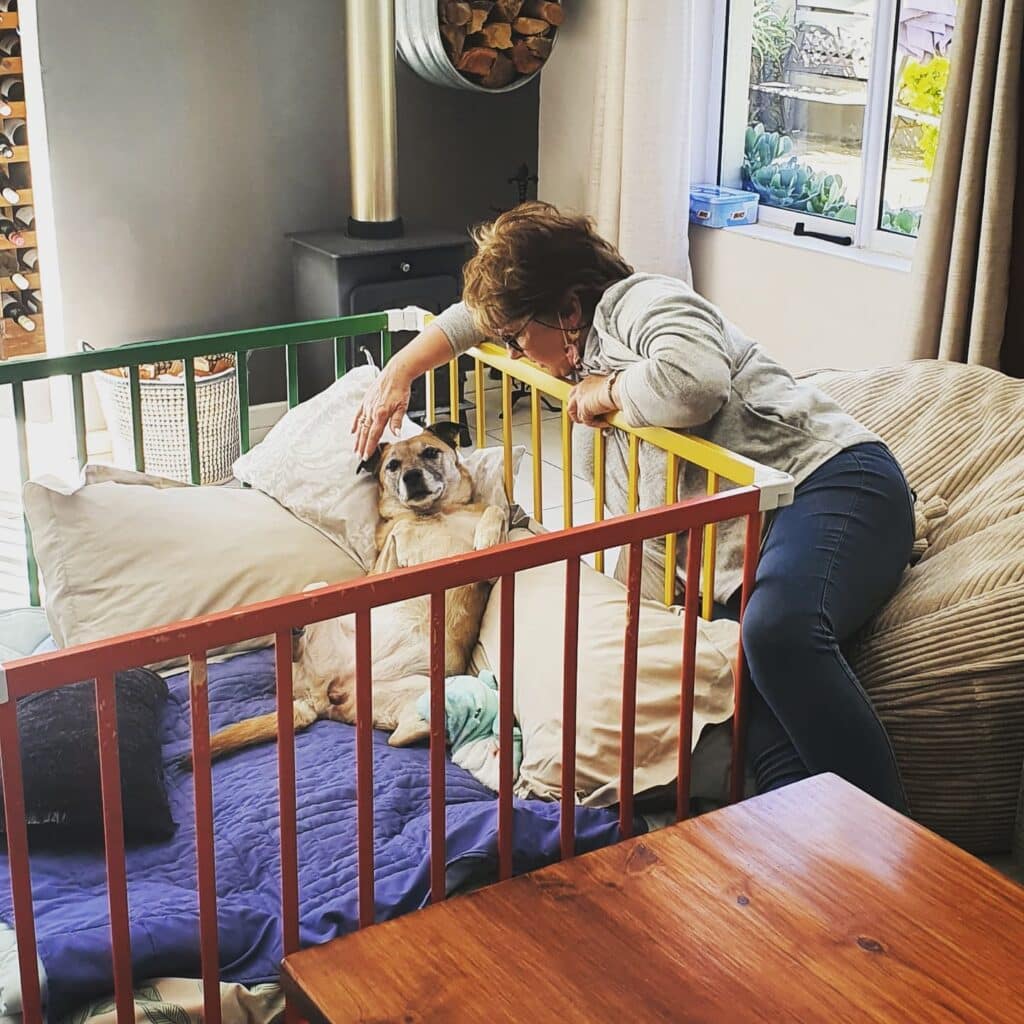
Strict rest and confinement: I chose to use a playpen rather than a crate for Emmy. This gave her enough room to lie comfortably without allowing her to move freely. The key is controlled rest. Unrestricted movement too early can undo the work done in surgery.
Leash-only outings: For the first number of weeks, Emmy went outside only on a leash, was always supervised when toileting, and was not allowed to wander, trot, or suddenly change direction. Even short toilet breaks matter. One slip, sprint, or jump can set recovery back significantly.
Managing slippery floors: My home has tiled floors, so I used yoga mats and non-slip runners in all high-traffic areas. Anywhere Emmy needed to walk in and out had grip. Slipping does not just cause falls. It places sudden strain on healing joints.
Reducing excitement: This was a big one for me. Emmy gets excited easily. Doorbells, visitors, sudden noises. During recovery, excitement equals risk. I removed the batteries from the doorbell. Visitors phoned instead of knocking. It may sound extreme, but it worked. Recovery is not just about physical restriction. It is also about managing stimulation.
Comfort during daily routines (including feeding): Another small adjustment that can help during recovery is making mealtimes more comfortable. Some dogs, particularly those recovering from CCL surgery or those who are older, may overcompensate through their front legs, shoulders, and neck when their hind legs are sore or weak. In these cases, raising food and water bowls slightly can reduce the need for repeated bending and make eating more comfortable.

This is something I have found helpful with Emmy as she has gotten older and developed arthritis in her back legs, which has led to stiffness through her upper body and neck.
As with any change, it’s important to speak to your vet about what is appropriate for your dog. Raised feeders may not be suitable for all dogs, particularly certain breeds that are prone to bloat, so it’s always best to get professional guidance before introducing them.
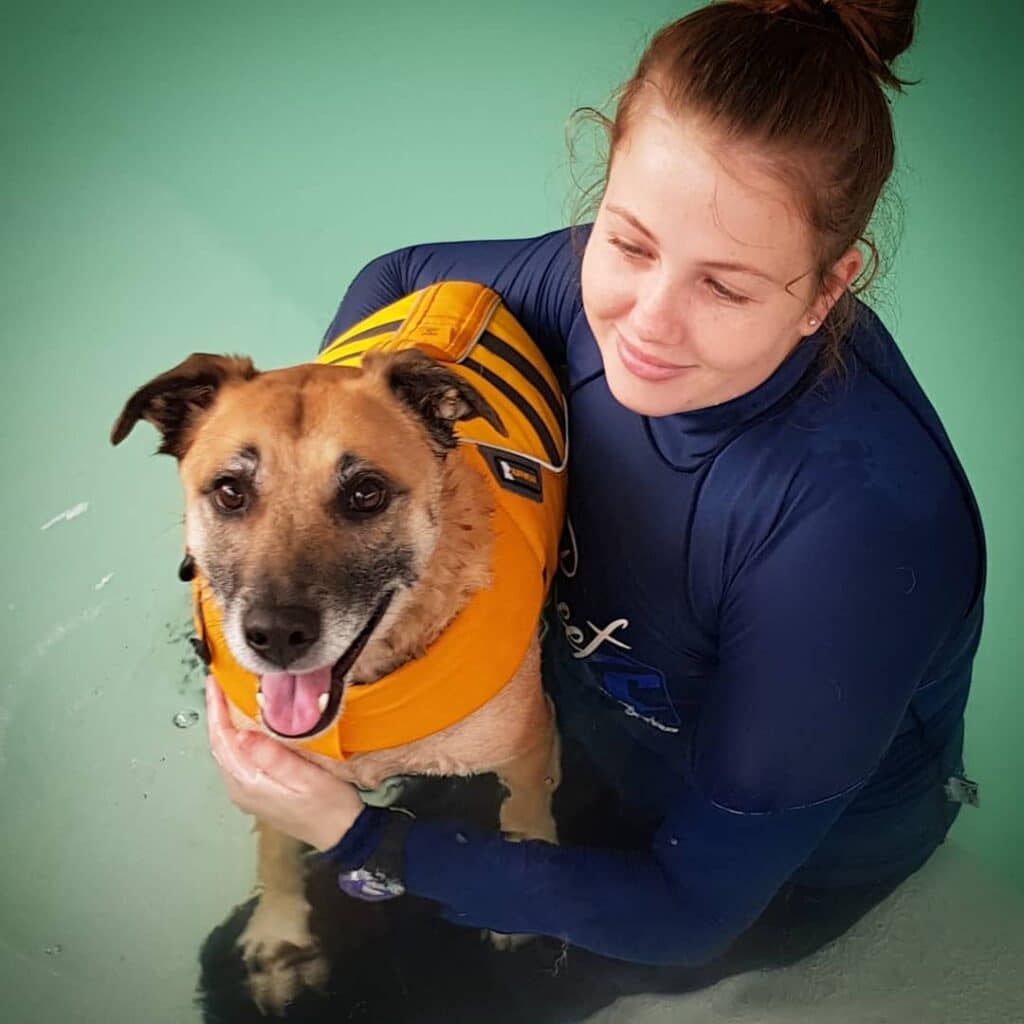
Physiotherapy and Rehabilitation: Physio played a huge role in Emmy’s recovery. This included regular physiotherapy sessions, underwater treadmill therapy which allowed controlled strengthening without impact, and gradual, guided increases in activity. After a few weeks, swimming was introduced as a non-weight bearing strength training excercise.
In addition to hands-on physiotherapy and controlled exercise, laser therapy is often used as part of post-surgical rehabilitation. Laser therapy is commonly used to help reduce inflammation, improve circulation to the affected area, and support healing of soft tissue around the joint. For some dogs, it can also help with pain management during the recovery phase. The suitability and frequency of laser therapy should always be guided by your vet or veterinary physiotherapist.
In addition to hands-on physiotherapy and controlled exercise, laser therapy is often used as part of post-surgical rehabilitation. Laser therapy is commonly used to help reduce inflammation, improve circulation to the affected area, and support healing of soft tissue around the joint. For some dogs, it can also help with pain management during the recovery phase. The suitability and frequency of laser therapy should always be guided by your vet or veterinary physiotherapist.
Physiotherapy is not only beneficial during recovery after surgery. Regular physio can be valuable for dogs of all ages, whether they are recovering from an injury, managing arthritis, or simply getting older. Ongoing physiotherapy can help keep muscles supple, maintain mobility, and address tightness or compensatory movement patterns before they become bigger issues.
To this day, Emmy still has regular physiotherapy sessions to ensure her muscles are not overly tight and that her mobility is not compromised as she ages. She also continues with laser therapy as part of her maintenance care, helping to support circulation and manage stiffness, particularly given her arthritis and past CCL injuries.
Why Jumping Is a Problem After CCL Surgery
One of the most important things I learned is this: Jumping down is more damaging than jumping up.
When a dog jumps down, especially from a height like a car, couch, or bed, the concussive force placed through the joints is significant. After CCL surgery, and even once healed, this impact can place unnecessary strain on both the repaired leg and the opposite leg.
During recovery, dogs should not be jumping at all.
After recovery, uncontrolled jumping significantly increases the risk of further injury.
Ramps and Life After CCL Surgery
This is where ramps become incredibly important.
Car ramps are essential.
Dogs need to get in and out of cars. Vet visits, physio appointments, daily life.
Lifting a dog is not always safe, practical, or possible, especially with medium to large breeds. Allowing a dog to jump out of a car after CCL surgery is one of the highest-risk movements you can allow.
For me, a car ramp was non-negotiable from the moment Emmy came home from surgery. It allowed her to move in and out of the car in a controlled, supported way without impact. You can read more about why large dogs require ramps here: READ POST.
Even long after recovery, she still uses a ramp for the car.
If you want to find out more about Dog Mom’s Signature Ramp options, there are links to the ramps below:
[wcpscwc_pdt_slider type=”featured”]
Couch and bed access: an honest conversation
This part is very personal and very honest.
I made the decision that Emmy would no longer have access to the bed at all. The reason was simple. If something caught her attention, she would jump down from the closest edge, not necessarily where a ramp was placed.
Unless you are able to train your dog consistently to use a ramp every single time they jump down, it can actually be safer to remove access altogether.
Instead, Emmy has a safe, comfortable sleeping space near my bed, close to me, without the risk of jumping.
Couch access was handled differently. Only after full recovery, only in controlled situations, and only using a ramp that can be moved out of the way when unsupervised.
This will look different for every household. The key is being honest about your dog’s behaviour.
Large Breed Ramp Considerations
For larger and heavier dogs, the angle of a ramp becomes even more important. The steeper the incline, the more strain is placed on healing joints. Longer ramps can help reduce that angle and provide a more gradual, controlled movement, particularly for dogs recovering from CCL surgery or those at higher risk due to size or weight.
Having ramp options that cater to different dogs and vehicles makes it easier to choose something that truly supports safe movement, rather than forcing a one-size-fits-all solution.
Preventing Future Injuries Starts Early
CCL injuries are not just a senior dog problem. If your dog is young and allowed on furniture, encouraged to jump in and out of cars, or regularly jumps down from height, those forces add up over time.
Using ramps from a young age reduces cumulative joint impact, protects knees, hips, and spine, and may help prevent injuries like CCL tears later in life. Prevention is always easier than recovery.
Final Thoughts on CCL Surgery and Recovery
CCL surgery is not just a surgical event. It is a journey that involves patience, structure, and long-term mindset changes.
What helped Emmy most was not just the surgery itself, but strict recovery management, physiotherapy, thoughtful changes to her environment, and removing unnecessary joint stress wherever possible.
If you are navigating CCL surgery with your dog, know that you are not alone. With the right support, planning, and tools, dogs can recover well and go on to live happy, active lives. And if you ever need reassurance or have questions along the way, you’re always welcome to reach out.
Kindest Regards,
Sandra
Related reading:
- Veterinary Physiotherapy for Dogs: Rehab & Mobility
- Arthritis in Dogs: Signs, Management and Ramp Tips
- Why Jumping Is Secretly Damaging Your Dog’s Joints
- How to Train your Dog to use a Ramp – A Simple Guide!
- Dog Ramps South Africa: Handcrafted & Sturdy for All Breeds
A quick note before you go: I’m not a vet or a veterinary physiotherapist. I’m a dog mom who’s lived through a lot of this myself with Emmy, Oscar and Levi, and learned the rest from other people’s dogs and from the research I’ve done working out how to build ramps that suit very different situations. I’ve also spoken to a lot of veterinary physiotherapists over the years, and much of what’s here comes from them. If your dog is showing any of the signs above, or anything here raises a question, please see your vet or a qualified veterinary physiotherapist, they know your dog and can give you the direct answer I’m not qualified to.


Good morning Sandra, thank you for your care-full comprehensive information about an ACL. I did not know or have a clue what we are in for. It sounds rather expensive, and now I am worried where all this money will come from? We live in Durbanville, Cape Town and are still looking for an affordable caring vet surgeon. It’s very hard, overwhelming. Are there any recommendations you would make ?
Hi Kathie, I’m so sorry to hear that your fur-child needs CCL surgery. It can be an expensive surgery, in the region of R25k, but this also depends on what type of CCL Surgery you have, the size of your doggo and at which vet. Of course, Pet Insurance is such a godsend in these situations. I can highly recommend Dr Michael Gray from Panorama Veterinary Clinic, as he is the one who did both of Emmy’s CCL Surgeries. Of course, being an emergency vet, staffed 24/7, Panorama is not the cheapest option and many other Vets would be able to do these surgeries at a lower cost. I have heard very good things about TAH in Durbanville, perhaps a good option for you to look at. I would also highly recommend that you make use of a vet physio for rehab – it’s such a game changer. Please feel free to reach out at any time for advice as you navigate this time. 🐾🤗