Why Big Dogs Need Ramps Just as Much as Small Dogs
Why Big Dogs Need Ramps
(Beyond Just Joint Issues)
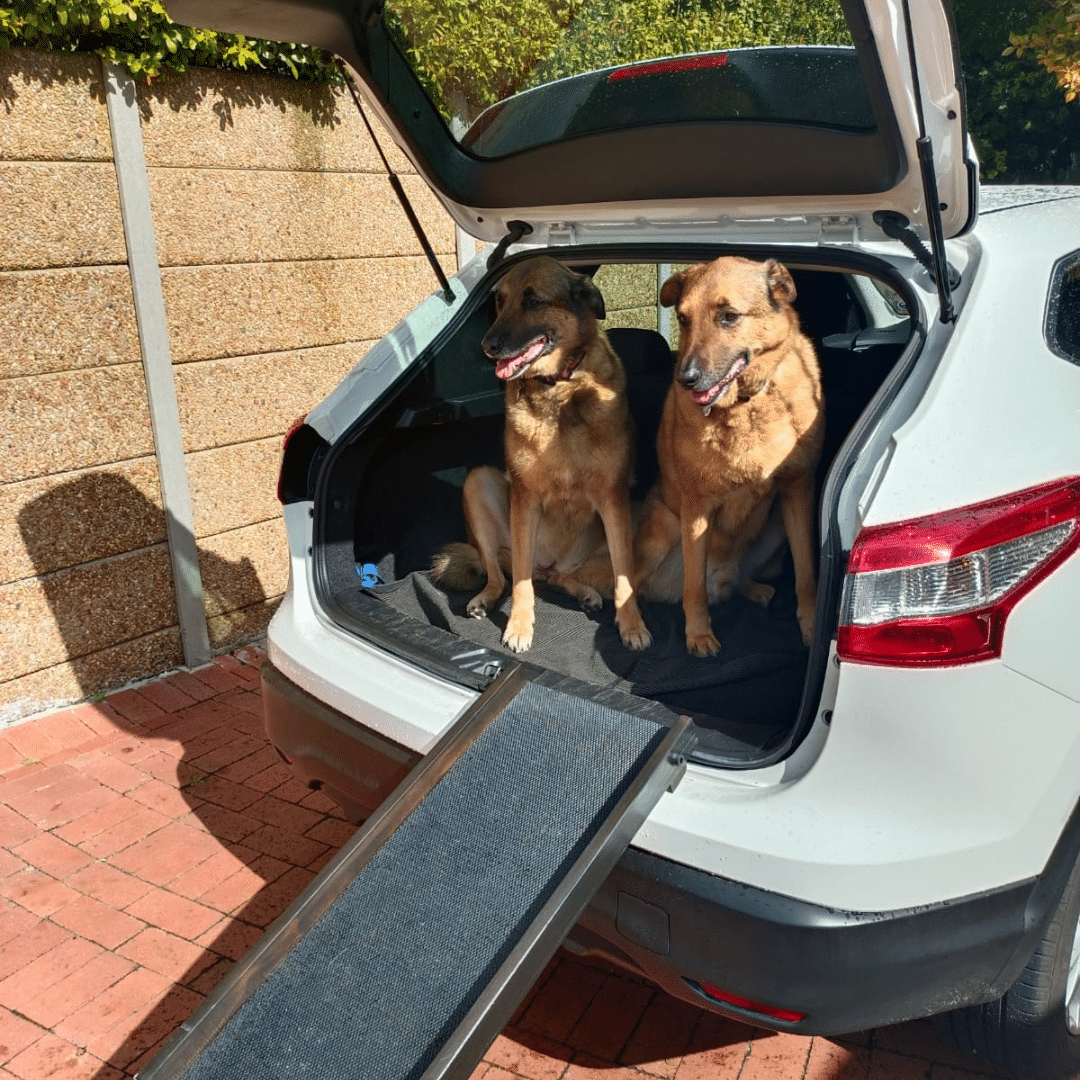
If you’ve ever wondered why big dogs need ramps, the answer is simple – large breeds face even greater joint stress from daily jumping.
Big dogs need ramps just as much as smaller dogs – and in many cases, they benefit even more.
When most people think of a dog ramp, they picture tiny-legged Dachshunds, Yorkies or other small breeds. But the truth is that large dogs place far more force on their joints, so ramps are just as important for them as they are for little dogs – if not more.
If you live with a Labrador, German Shepherd, Rottweiler, Staffie, Golden Retriever or any other big breed, every jump they make places incredible strain on their joints. Over time, that repeated impact can lead to pain, injuries and even life-long mobility issues.
Here’s why ramps aren’t a “small dog thing”. They’re a joint-saving essential for big dogs too.
Why Big Dogs Need Ramps:
More Weight Means More Impact on Landing
A simple rule applies to all movement: The heavier the dog, the harder they land.
When a large dog jumps off:
- the bed
- the couch
- the car boot
- a raised step
…the ground reaction force (the shock that travels back through their legs, joints and spine) is significantly higher than it is for a small dog.
A 35kg Labrador landing after a jump absorbs multiple times the force of a 6kg Dachshund. Bones and joints aren’t designed to repeatedly take that level of impact. Ramps reduce that shock entirely.
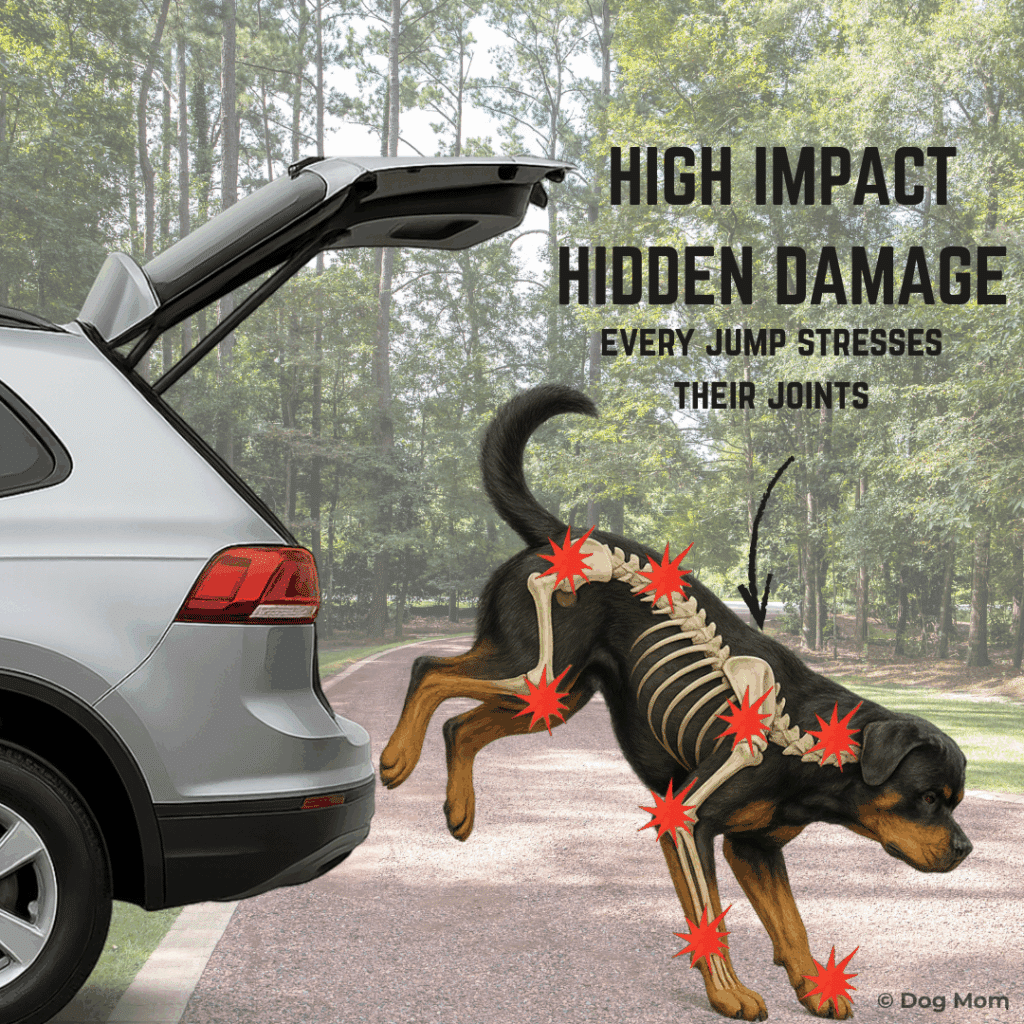
Jumping Down Is Where Most Joint Damage Happens
Most people worry about their dog getting up. But going down is where the real risk lies. Jumping down jars:
- shoulders
- elbows
- wrists
- hips
- knees
- lower spine
Big dogs often jump down with speed and confidence, which means they put even more pressure on those joints. Over the years, this is one of the biggest contributors to chronic pain in large breeds. A ramp removes the drop completely.

Large Breeds Are More Prone to Joint Conditions
Certain big breeds naturally carry a higher risk of joint problems, including:
- Cruciate ligament tears
- Hip dysplasia
- Elbow dysplasia
- Arthritis
- Early joint degeneration
- Spinal strain due to weight distribution
You’ve heard this story a hundred times:
“His back legs suddenly gave way,”
“She started limping after exercise,”
“He used to jump in the car, and now he won’t.”
These changes don’t suddenly appear. They build over years of repeated impact.
Using a ramp from a young age helps prevent the damage that often leads to these conditions later in life.
Big Dogs Hide Pain Better than Small Dogs
Small dogs complain. Big dogs cope.
A lot of large breeds have a high pain tolerance, which means:
- they continue jumping even when it hurts
- they push through discomfort without showing it
- small changes in gait are easy to miss
By the time they finally show obvious pain, the damage is often well-progressed.
A ramp gives them a safer alternative long before symptoms appear.
Ramps Make Everyday Life Easier for Both of You
It’s not just about preventing injury. Using a ramp makes daily tasks simpler:
- No more lifting a 30kg to 50kg dog into the car
- No more straining your back when they refuse to jump
- No more worrying about slippery steps after surgery or when they’re tired
- No more fear of them slipping when they jump into bed
Most big dogs take to the ramp quickly, especially if they’re already used to following your lead.

Prevention Is the Best Form of Care
The best time to start protecting your dog’s joints is:
- before they show signs of pain
- before arthritis sets in
- before they injure a cruciate ligament
- before jumping becomes a struggle
Think of a ramp as an investment in years of mobility.
You wouldn’t wait until your dog’s teeth are rotten to start brushing. In the same way, you shouldn’t wait until your dog is limping to start reducing joint impact.
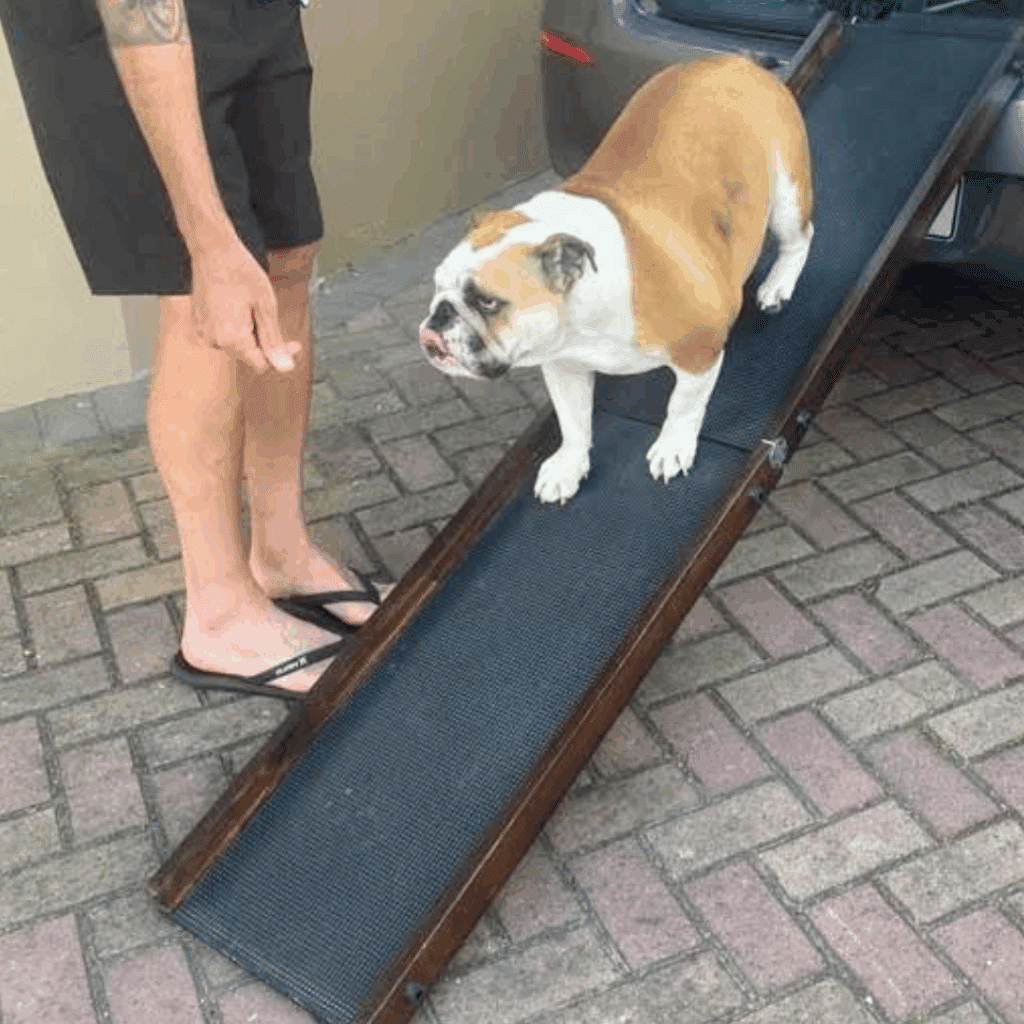
Handcrafted Ramps Built for Big Dogs
Most ramps available online are only designed for dogs up to 20–25kg.
That’s why Dog Mom ramps are different.
They’re built:
- for large and heavy breeds
- with high-traction rubber for secure footing
- with strong custom hinges, no generic parts
- to support real-world, everyday use
- to prevent the concussive forces that damage joints over time
This is why so many German Shepherd, Labrador, Staffie and Rottie parents choose them.
Choosing the right ramp matters
Not all ramps create the same incline. Ramp length and height play a huge role in how much strain is placed on your dog’s joints over time. Use our Dog Ramp Angle Calculator to compare incline angles for vehicle, couch, and bed ramps, and choose the gentlest, joint-friendly option for your dog’s size, age, and daily routine.
Final Thoughts
Big dogs aren’t immune to joint problems. If anything, they’re more vulnerable because of their weight, power and energy. A dog ramp isn’t just a mobility tool. It’s one of the simplest, most effective ways to protect your dog’s joints, prevent injuries, and keep them moving comfortably for years.
I’ve been building ramps for years now, but my ramp journey didn’t start as a business. It started with my girl, Emmy. She had two cruciate ligament surgeries, and you can read the full story HERE! Before her first surgery, I didn’t realise how dangerous everyday jumping was for her joints. She used to launch on and off the couch, the bed, and in and out of the car without hesitation. I had no idea how much strain that was putting on her body over time.
After her first cruciate operation, everything changed. The very first ramp I ever built was a car ramp, so she could safely get in and out of the car to go to daycare, the vet, the beach and on our daily walks. Once I saw how much strain it removed from her landing, I built her a couch ramp so she could be with the family without risking further injury. From that point on, she was only allowed to use the couch via her ramp and only allowed into the car using her car ramp.
I also had to stop her getting onto the bed completely, because there wasn’t space in my bedroom for a ramp at the right angle. It was a very emotional decision for me, because the bed had always been her favourite place. But keeping her healthy mattered more. I bought her a comfortable orthopaedic bed for the floor, and now she has comfy beds all over the house so she’s always cosy and included wherever we are.
Since then, I’ve become a genuine advocate for using ramps before joint issues begin. So many people who contact me are doing so because their dog has already had surgery, is struggling with pain, or is suddenly too old to jump safely. I’ve lived that journey, and I want to help people avoid the regret and panic that come when you realise the damage has already been done. It is so much easier to train a young, healthy dog to use a ramp from the beginning and protect their joints long before any signs of discomfort appear.
Whether you buy a Dog Mom ramp or a ramp from anywhere else, I strongly believe there are two things every first-time dog parent should invest in: a ramp and pet insurance. Both protect your dog’s future in ways you can only truly appreciate once you’ve been through what I went through with Emmy. You can read my blog post on pet insurance HERE!
If You Need Help Choosing the Right Ramp
Every dog deserves to move comfortably and safely, and sometimes all it takes is the right bit of support at the right time. If you’re not sure which ramp will suit your dog’s lifestyle, mobility or home setup, I’m just a message away. After years of building ramps and helping dog parents through every stage of the journey, I’m always here to offer honest, practical advice tailored to your dog’s needs. You can find my contact details on the ABOUT page.