


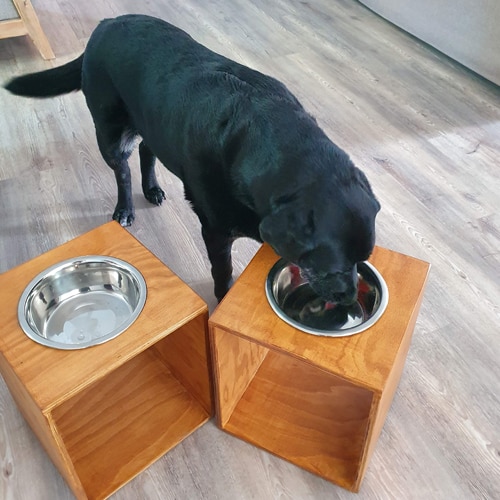

Is a raised feeder right for your dog?
A raised feeder may help a dog who struggles to bend down comfortably. By bringing the bowl closer, it can reduce how far the dog needs to lower their head at mealtimes.
This may be helpful for some dogs with arthritis, stiffness, neck or back discomfort, restricted mobility, or weakness following an injury or operation. The benefit depends on the dog’s condition and the height of the feeder. A raised bowl does not treat arthritis or prevent mobility problems.
Healthy dogs do not automatically need their bowls raised. Before changing your dog’s feeding height, ask your vet or veterinary physiotherapist whether a raised feeder is appropriate and what height would suit your dog.
Raised feeding and bloat
Gastric dilatation-volvulus, often called GDV or bloat, is a life-threatening emergency in which the stomach fills with gas and may twist. Research in large and giant-breed dogs has found an association between raised feeding and an increased risk of GDV.
Dogs considered more vulnerable include large, giant, and deep-chested dogs. Great Danes, Weimaraners, St Bernards, Irish Setters, and Gordon Setters are among the breeds commonly affected, although bloat can occur in other breeds and mixed-breed dogs too. Age, eating quickly, eating one large meal a day, and having a close relative who has experienced GDV can also affect risk.
If your dog belongs to an at-risk breed or has a family history of bloat, speak to your vet before using a raised feeder.
A swollen abdomen, repeated attempts to vomit without bringing anything up, excessive drooling, restlessness, weakness, or collapse can be signs of GDV. It requires immediate emergency veterinary care.
Choosing the correct height
There is no single “optimal” feeder height for every dog. If your vet or veterinary physiotherapist recommends raised feeding, ask them how high your dog’s bowl should be. You can then compare that measurement with the feeder dimensions in the size guide. If your dog falls between two sizes, choose the smaller feeder unless your veterinary professional advises otherwise.




Reviews
There are no reviews yet